
Data consolidation is the process of bringing data together from multiple sources and assembling it in a single location with a single point of access. Once your data is consolidated, you can aggregate, summarize, and optimize metrics to create unified views for easier analysis and consistent reporting.
Data comes from cloud apps, security tools, logs, metrics, and customer platforms. If you are piecing it together manually or relying on disconnected systems, you spend extra time and risk missing insights.
Bringing data from multiple sources into one place simplifies management, can improve data quality, and supports faster decision-making. It reduces the work of managing silos and makes raw data easier to handle.
In this guide, we explain what data consolidation means, describe techniques, note common challenges, and explain how Cribl helps consolidate, transform, and route data where you need it.
What is the difference between data integration and data consolidation?
Data integration moves your data between systems, while data consolidation optimizes and simplifies that data to make it actionable. They are related but serve different roles in your data strategy.
Integration is the plumbing. It connects multiple sources and routes data to various destinations, ensuring everything moves across your architecture. Whether you pull from CRMs, cloud services, or security tools, integration lets you collect, process, and deliver data where it needs to go. In Cribl, that means configuring Sources (where data comes from) and Destinations (where processed data goes), with features like backpressure triggers, persistent queues, and load balancing to keep operations reliable. You can explore the full catalog of Cribl integrations in our docs.
Data consolidation focuses on cleaning data, reducing complexity, and shaping it for better performance. That includes handling high-cardinality data by aggregating or dropping noisy metrics, optimizing metrics by grouping similar ones and rolling them up over time, and normalizing data from different systems into a single, unified view.
Integration keeps data moving; consolidation makes that data useful, efficient, and ready for analysis. Integration feeds the pipeline, and consolidation tunes it for performance.
What are the most common data consolidation techniques?
The three most common data consolidation techniques are hand coding, ETL software, and specialized ETL tools. The right fit depends on your infrastructure, data volume, and technical expertise.
Hand coding
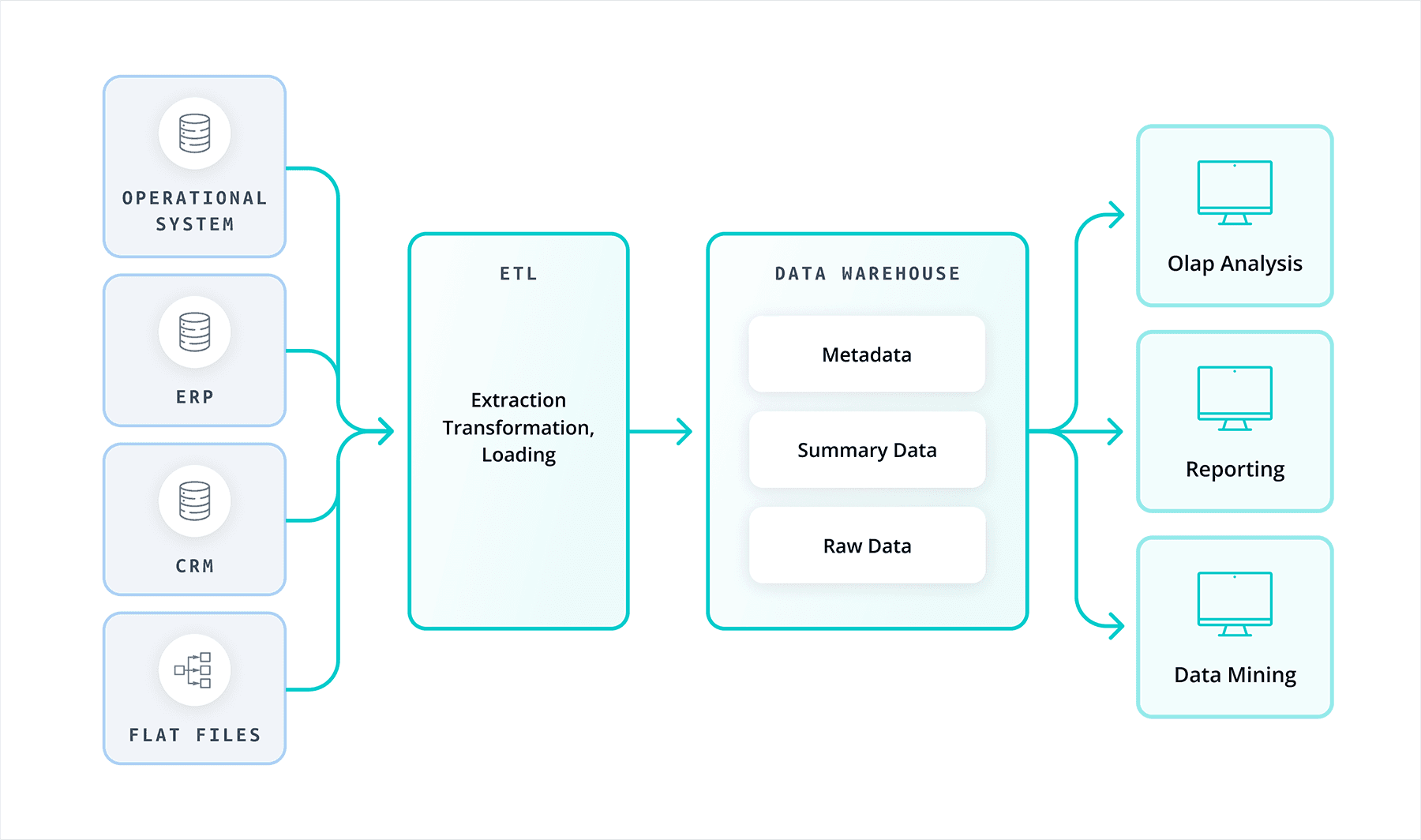
Hand coding means writing scripts to extract, transform, and load data from various sources, typically in Python, SQL, or Java. This method offers maximum control and customization, but it is time-consuming and requires significant technical skill. Maintaining and scaling hand-coded pipelines becomes a bottleneck as data volumes grow, and it requires ongoing maintenance.
ETL software
ETL (Extract, Transform, Load) software automates much of the data consolidation process. These platforms streamline raw data collection, automate transformations, and load consolidated data into a data warehouse or data lake. It reduces the need for hand coding and simplifies management of data from multiple sources.
Specialized ETL tools
Specialized ETL tools offer targeted capabilities like automated data extraction, data cleansing, or metadata management. They are useful when you want to enhance an existing data pipeline without rebuilding it from scratch.
How do you choose the right technique?
The best technique for your organization depends on four factors:
Volume of data: Larger data sets benefit from automated ETL tools.
Technical expertise: If your team lacks coding skills, ETL software offers a user-friendly alternative.
Scalability: Consider future growth. A flexible solution like Cribl Stream can help avoid future bottlenecks.
Real-time needs: If near-real-time processing is required, choose solutions that support streaming data pipelines.
See our guide comparing data pipelines and ETL for more on which strategy fits your needs.
How does the data consolidation process work?
The data consolidation process discovers, extracts, transforms, loads, integrates, and stores data to create a reliable dataset for decision-making. In practice, it comes down to three moves that Cribl Stream helps automate.
Reduce high-cardinality data. Start with data that has many unique dimensions and uncommon values. Left unchecked, it clutters dashboards and slows queries. Consolidate metrics with large numbers of unique dimensions, aggregate metrics to reduce the total number of time series, and drop noisy, low-value metrics to improve query performance.
Optimize metrics. After reducing noise, organize what remains. Group and segment similar metrics into fewer categories, apply time-based rollups that aggregate high-frequency metrics into hourly or daily intervals, and combine related or duplicate metrics into unified ones.
Normalize metrics. Aggregate metrics from different systems into a single view for easier analysis and consistent reporting.
Cribl Stream automates much of this process. You can select metrics to aggregate directly from the Data Preview, which automatically adds the necessary Functions to your pipeline. No custom scripting is required.
What are the common challenges of data consolidation?
Data consolidation has benefits but also common challenges. Below are typical issues and approaches.
Data silos and fragmentation
Data stuck in isolated systems is common, and breaking down silos across legacy tools and third-party platforms can be complex. One solution is to use flexible tools that integrate data from multiple sources.
Data quality issues
Inconsistent formats, duplicates, and gaps lead to poor analysis and bad decisions. Implement processes for data validation, cleansing, and normalization to keep data accurate and trusted.
Scalability concerns
As data grows, manual or inefficient systems struggle to keep up, causing delays and higher costs. Scalable solutions like Cribl Stream handle large volumes and automate processing so growth does not break your architecture.
Time-consuming manual effort
Manual coding and hand-built processes require time and increase the risk of errors. Automate where possible. ETL and consolidation tooling reduce manual work and lower error rates.
Addressing these challenges can speed consolidation and increase the value of your data.
What are data consolidation best practices?
Effective data consolidation should act like a central hub that automatically ingests data from a range of sources. This reduces complex configurations and the need for custom scripting for every data source you onboard.
Consolidation also needs to handle the variety of formats in Security and IT systems. You may be dealing with hundreds of data types and formats, from Syslog to key-value pairs, JSON, CEF, OTel Spans, and more. For a deeper look at trace data, see our guide to optimizing APM costs with OTel Spans and Metrics.
Consolidation implemented well supports hundreds of out-of-the-box protocols and parsers, so you do not have to write custom scripts or perform manual normalization. Translating formats into a common structure makes analysis simpler and reduces one-off solutions for each data type.
Because consolidation combines many sources, the architecture must be efficient and scalable. Design for expected load and include a front end that identifies and pre-processes data, filtering out unnecessary information before sending it onward. This reduces bandwidth use and keeps pipelines from being overloaded by irrelevant data, which is important in cloud environments where costs can increase quickly. For an example, see how Cribl's universal receiver conquers data silos.
How Cribl can help with data consolidation
Cribl, the AI platform for telemetry, is built on the Data Engine for IT and Security, and data consolidation is the kind of problem that engine was designed to solve. Cribl Stream's flexibility makes it suitable for both on-premises systems and cloud deployments. It receives continuous data from sources including Syslog, OpenTelemetry (OTel), Model Driven Telemetry (MDT), Kinesis, Kafka, and TCP JSON, reducing the need for a separate collection system for every data type and cutting the maintenance and scaling work that comes with them.
As a universal receiver, Cribl Stream consolidates data flows into a central tier for collection, processing, and routing to multiple destinations. It can ingest data intermittently, on demand, or on a schedule, and fetch or replay data from local or remote locations. This lets you route only the data needed to your systems of analysis, keep expensive tools focused on higher-value signals, and send other data to more cost-effective storage.
Because Cribl is vendor-agnostic, consolidation does not create lock-in. Your telemetry stays portable, interoperable, and searchable, and you retain the ability to onboard new tools, migrate SIEMs, or evolve your architecture without data loss or disruption. The result is simpler data management, less strain on teams, and clearer control over your data.
Schedule a demo or start with a free Cribl.Cloud account and process up to 1TB per day, no license required.